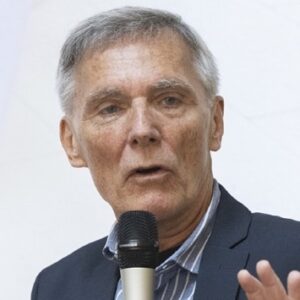
Klaus Ehrlich is General Secretary of the European Federation of Rural Tourism.
Coordinator Large-Scale Partnership for Tourism of the Pact for Skills.
Klaus Ehrlich studied Economics – Business Administration at the University of Siegen (Germany) and Sevilla (Spain) from 1976-1983. Co-founder and manager of several entrepreneur associations related with rural tourism in Spain (RAAR, AHRA) from 1991 until 2006. Since 2002 he has been responsible for the management of Ruraltour – European Federation of Rural Tourism, currently as general secretary. Involved in working groups and consultative bodies at the European Commission related to tourism, rural development, and digital economy. Coordinator of the Pact for Skills Tourism LSP, member of the expert group of the Transition Pathway for Tourism – T4T of the European Commission. Independent work in consultancy and training at vocational and academic institutions. Professional experience and background relate to private managing tourism trade organizations, representing micro- and nano tourism services and providing advisory services to them. Special expertise in fostering sustainable local development through tourism, engagement and cooperation with the local communities, digital economy, vocational training concepts, research and follow-up of visitor’s quality perception, and development of nature or culture-based tourism products. Overall responsible for the organization and content of the 9 editions of the European Congress on Rural Tourism www.europeanrtcongress.org since 2003, and of the conferences Sustainable Tourism for Rural Development https://strd2017.org and http://strd2019.org . Participation in working groups and consultative bodies of the European Union such as the Civil Dialogue Group on CAP Strategic Plans and Horizontal Matters, Rural Pact, Expert Group on Travel Package Directive and T4T, Pact for Skills Tourism LSP (coordinator), Community Group Rural Tourism of the Rural Pact, and other ad-hoc groups. Professional work and contacts in 33 countries, including transitional and developing economies, which allows drawing on a wide scope of both theoretical and practical experiences at all stages of sustainable rural tourism development.