


How Moldova turned geology, records and wine heritage into a destination – and why World Wine Tourism Day 2026 – Moldova (ZMTVV2026) may mark the next stage.
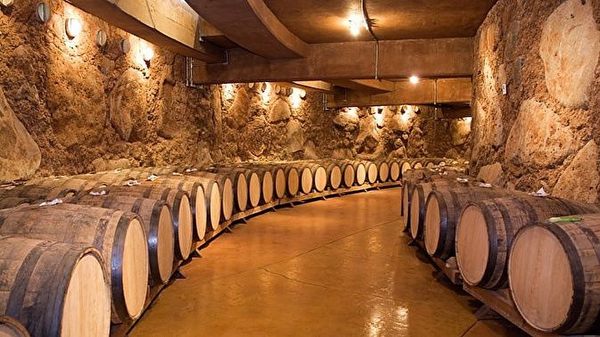
There are wine destinations where the story begins in the vineyard. In the Republic of Moldova, it can begin millions of years before the first vine was planted. Beneath the country lies another landscape: limestone, galleries, underground streets, wine collections and traces of a geological history that long predates human civilisation.
A heritage that was never built for tourists
More than 30 million years ago, a significant part of what is now the Republic of Moldova was shaped by ancient marine environments associated in regional geology with the Sarmatian Sea. Over geological time, these environments contributed to extensive limestone deposits. Much later, people began extracting that stone for construction, and industrial quarrying created enormous underground networks.
Then came the transformation: instead of continuing to remove stone from underground, people began taking wine into it. Former mines became spaces for production and ageing. Galleries became streets. Industrial voids became collections, tasting rooms and visitor routes.
sea → limestone → mine → winery → tourism destination
At Cricova and Mileștii Mici, this sequence is an unusually vivid example of what heritage studies call adaptive reuse. Infrastructure created for one economy is absorbed by another without losing its material identity. Here, the process has unfolded through three major stages: extraction, winemaking and tourism.
According to the documentation submitted by the Republic of Moldova to the UNESCO World Heritage Centre, the Cricova galleries extend for more than 120 kilometres, while the Mileștii Mici network exceeds 200 kilometres, only part of which is currently used for wine production, storage and tourism. Their significance lies not simply in scale, but in the continuity of function and transformation.
In January 2025, “The Underground Wineries of Moldova (Cricova and Mileștii Mici)” were placed on Moldova’s UNESCO World Heritage Tentative List. The distinction matters: they are not yet inscribed on the World Heritage List. Yet even this preliminary status confirms that these places should be understood as more than large cellars. They are living geological, industrial and wine heritage.
Moldova does not need to become another Tuscany
Tourism marketing often reaches for a famous comparison: “the Tuscany of…” or “the Bordeaux of…”. Such analogies can help audiences orient themselves quickly, but they become limiting when they begin to replace a destination’s own identity.
Moldova does not need to become a copy of another wine region. Tuscany already exists. Bordeaux, Rioja and the Douro already exist. The strategic task is to identify what Moldova can say about itself with exceptional credibility.
One part of that answer lies literally beneath our feet. Most wine destinations are imagined horizontally: roads crossing vineyards, villages, estates and landscapes. Moldova can add another dimension – the vertical one.
Above ground are vineyards, villages, gastronomy, monasteries, contemporary wineries and rural communities. Below ground are limestone corridors, former mines, underground streets, collections and ageing chambers. Deeper still lies geological time. Wine connects them.
Moldova as a vertical wine destination.
The visitor does not only move from one winery to another. The visitor can move between surface and underground, between present and past, between economy and heritage – in a sense, travelling vertically through time.
Before ZMTVV: when records began to become a tourism route
An important episode preceded Moldova’s first national celebration of World Wine Tourism Day. On 9 November 2020, in Ialoveni, the “Guinness Records Route in the Republic of Moldova” was launched in cooperation with APIT.
The concept was unusual. Records were no longer treated merely as isolated achievements; they were to be connected into an itinerary that visitors could discover. The official source from Ialoveni District described five attractions as record holders or candidates for records, including the Mileștii Mici underground wine collection, exceptional underground sparkling-wine production, and remarkable underground wine-tourism routes.
The distinction between a certified Guinness World Record and a record candidacy is important. Not every element of the route had already been formally certified by Guinness. The value of the concept, however, lay elsewhere: exceptional achievements were being reframed as parts of an itinerary, a story and a destination economy.
Seen retrospectively, the Records Route can be understood as one of the conceptual precursors to ZMTVV in Moldova. It already expressed a central idea: an exceptional object becomes a tourism product when it is connected with other places, services, stories and experiences.
How World Wine Tourism Day reached Moldova
World Wine Tourism Day has its own institutional geology. Its origins lie in Europe. In 2009, RECEVIN – the European Network of Wine Cities – established European Wine Tourism Day, celebrated on the second Sunday of November. The model was decentralised: each wine city or territory designed its own programme, while common communication amplified the visibility of the initiative.
In 2019, cooperation between RECEVIN and AMETUR – the World Wine Tourism Association – gave the initiative a wider international dimension. For 2026, RECEVIN identifies 8 November as World Wine Tourism Day.
Moldova had already begun connecting its wine heritage to European networks. In 2020, the Wine Road of Moldova became the country’s first tourism itinerary integrated into ITER VITIS – Les Chemins de la Vigne, a certified Cultural Route of the Council of Europe. During the same period, Cricova held the title European Dionisio City 2020-2022 within RECEVIN.
14 November 2021. Mileștii Mici. Cricova.
The first documented national celebration of World Wine Tourism Day in the Republic of Moldova took place on 14 November 2021. APIT, together with the Association of Sommeliers of Moldova and sector partners, launched the initiative at a moment when tourism and hospitality were still recovering from the shock of the COVID-19 pandemic.
The promotional programme was anchored by Mileștii Mici and Cricova – two of the most recognisable symbols of Moldovan wine. A contemporary Agroexpert report stated that more than 200 wineries across the country joined the initiative dedicated to World Wine Tourism Day. For academic precision, this figure should be read as the number reported by that source, rather than as an independently audited count by the author.
What matters is the principle: from its first edition, the celebration moved beyond the boundaries of a single event and acquired a national dimension. Multiple wineries, multiple experiences, one destination – Moldova.
The bottle that turned an event into memory
At Mileștii Mici, the inaugural edition also left an unusual physical trace. Participants took part in renewing the wax seals on bottles from the 1986 collection. Some bottles were signed and placed in a dedicated niche marking the first celebration of World Wine Tourism Day in Moldova.
Beyond ceremony, the gesture has acquired unexpected symbolic force. The first edition did not remain only in a press release or a photograph. It left something underground.
A bottle became an archive.
In a country where the memory of wine is physically preserved inside galleries, the first ZMTVV created, without naming it as such, its own tourism time capsule.
2022: when local identity gained global validation
The following year brought a different argument for Moldova’s wine identity. At the Red and White Session of the 2022 Concours Mondial de Bruxelles, Fautor Negre 2017 received the highest jury score in the red-wine category among 5,084 entries from 35 countries. The official results awarded it a Grand Gold Medal and the title International Red Wine Revelation.
One detail is especially important for tourism: Negre 2017 is a blend of Fetească Neagră and Rară Neagră. Moldova was not recognised for reproducing somebody else’s model, but through a wine built around varieties deeply connected to the regional wine landscape.
This offers a strategic lesson. Moldova does not need to convince visitors that it can successfully reproduce what already exists elsewhere. It needs to invite them to discover what belongs to the place itself.
Terroir becomes identity. Identity becomes story. Story becomes a reason to travel.
From this perspective, Moldova possesses two kinds of record relevant to wine tourism: a record of space, represented by its underground heritage and the Mileștii Mici collection, and a record of taste, represented by the international performance of Fautor Negre 2017. One lies underground; the other was confirmed at the jury table.
From a central event to a national celebration
After the 2021 launch, World Wine Tourism Day progressively moved beyond the logic of a single central programme and consolidated itself as an annual moment for promoting wine tourism across the country. Wineries from different regions became part of the same idea: opening wine heritage to visitors and connecting wine with tourism, gastronomy, culture and local experiences.
This evolution matters because the celebration should not be read merely as a succession of “host wineries”. Its real value lies in the geographical expansion of the experience and in the emergence of a shared national narrative.
2024-2025: Château Vartely and professionalisation
On 10 November 2024, Château Vartely hosted the central World Wine Tourism Day programme in a format organised by the Ministry of Culture, the National Tourism Office, the National Office of Vine and Wine and APIT. The edition highlighted a contemporary destination model: winery, gastronomy, accommodation, landscape and events integrated into a single experience.
On 9 November 2025, Château Vartely hosted the celebration again, this time with an explicitly professional dimension. APIT, in partnership with the responsible public institutions, brought together tourism operators, guides, destination managers, wine producers and experts, with a focus on cooperation, sustainability, networking and product development.
Viewed as a whole, the trajectory becomes visible: 2020 – records are connected into a tourism route; 2021 – ZMTVV is launched nationally; 2022 – Moldovan wine receives exceptional international validation; 2024 – the celebration becomes more institutionalised; 2025 – it professionalises; 2026 – it moves toward a national destination platform.
2026: World Wine Tourism Day 2026 – Moldova (ZMTVV2026) – when the country becomes the venue
ZMTVV2026 – World Wine Tourism Day 2026 – Moldova (Romanian: Ziua Mondială a Turismului Vitivinicol 2026 – Moldova) – is the Moldovan edition taking place on 8 November 2026, coordinated by the Employers’ Association of the Tourism Industry of the Republic of Moldova (APIT), in cooperation with the National Tourism Platform (PNT), as a common platform for promotion, professional dialogue, cooperation and wine-tourism product development. The concept starts from a simple premise: wine tourism is not the product of a single winery, but the outcome of a network in which wine is connected with gastronomy, accommodation, transport, guiding, heritage, culture, local communities and tourism distribution. For that reason, the 2026 edition is not conceived as a single celebration at a single venue, but as a national two-level architecture: a central professional programme and a network of public activities developed across different regions of the country.
The first level is the central professional programme, organised along the Castel Mimi – Asconi Winery axis. At Castel Mimi, the roundtable “Green & Ecological Wine Tourism: From Sustainability to Competitive Tourism Products”, scheduled from 11:00 to 11:45, brings together representatives of public authorities, the tourism and wine industries, academia, business and international partners. The dialogue addresses green and ecological tourism, sustainability, the integration of wineries into bookable tourism products, destination competitiveness, the role of local communities and public-private cooperation. The programme continues at Asconi Winery, where policy and strategy are connected with the concrete winery experience, gastronomy, hospitality and professional relations across the sector.
The second level of ZMTVV2026 is national and decentralised. APIT invites wineries, tour operators, guesthouses and accommodation providers, restaurants, guides, professional organisations, local development structures and communities to organise their own tours, tastings, gastronomic programmes, open-door events, excursions and routes, cultural activities, local experiences, special offers and tourism packages on the same day. Each participant retains its own commercial identity and programme autonomy, while the activities are connected through the shared ZMTVV2026 identity. APIT and PNT act as a coordination and amplification platform: collecting initiatives, connecting them through a common destination narrative and helping promote them to the industry, the public, the media and international partners.
We no longer invite the country to an event. The country becomes the event.
Through this architecture, ZMTVV2026 seeks to achieve more than visibility for a single day of celebration. The public is invited to discover Moldova through wine, gastronomy, heritage and authentic experiences, while the industry is encouraged to convert existing resources into better integrated, bookable and marketable products. For public authorities and professional organisations, the edition creates a space for dialogue on policy, sustainability, skills and destination management; for international partners, it offers a platform for cooperation and exchange of practice. The strategic objective is to move from resource to product, from winery to destination and from event to cooperation mechanism: market access, public-private cooperation, skills development, community integration and stronger connections between wine, gastronomy, accommodation, transport, culture and tourism.
Within this logic, the success of ZMTVV2026 should not be measured only by the number of people attending on 8 November. Its real relevance will be determined by what remains afterwards: new partnerships between wineries and tour operators, new products and routes, bookable experiences, stronger visibility for wine regions, deeper links with gastronomy and local communities, institutional dialogue and access to international networks and markets. ZMTVV2026 therefore brings RECEVIN’s philosophy back into focus – multiple local experiences connected through a common identity – and adapts it to Moldova’s ambition to function as a coherent and competitive wine-tourism destination.
Why APIT?
Wine tourism cannot be produced by a single enterprise. A winery may produce outstanding wine, operate a restaurant and even provide accommodation, but a destination is always larger than the enterprise.
Visitors use roads, airports, transport companies, guides, digital platforms, restaurants, hotels, public services and local experiences. They do not perceive the organisational boundaries between these actors. They experience Moldova.
For that reason, APIT’s role should not be reduced to organising World Wine Tourism Day. Its strategic role is that of a connector: between wineries and travel companies, business and government, destinations and markets, employers and skills systems, Moldova and European networks.
This is what contemporary tourism theory describes as destination governance. A destination is consumed as a whole but produced by many independent actors. The challenge is not only the existence of resources, but their ability to function together.
Wine is not the final product
Moldova already possesses a strong international asset: wine. Yet from a tourism perspective, an exported bottle represents only part of the potential value. It may reach Paris, Berlin or Tokyo without the buyer ever seeing Moldova.
Wine tourism reverses that relationship. Instead of exporting only the product, the destination invites the consumer to its place of origin. This creates what can be called an export of experience.
Visitors come to Moldova and consume not only wine, but accommodation, gastronomy, transport, guiding, culture, local products and time in communities. Success should therefore be measured not only by how many people enter a cellar, but also by length of stay, visitor expenditure, the number of places visited, businesses integrated into products, online bookability, presence in tour-operator portfolios and repeat visitation.
Wine becomes the anchor. The destination becomes the product.
A sustainability that begins with stone
The concept of Green & Ecological Wine Tourism may sound highly contemporary. Yet in one sense Moldova has practised an intelligent form of infrastructure adaptation for decades. Limestone galleries naturally provide relatively stable temperatures and humidity levels for wine maturation. UNESCO documentation notes that these conditions reduce the need for thermal insulation and certain forms of mechanical climate control.
This does not automatically make every activity sustainable. Sustainable tourism also requires attention to transport, energy, water, waste, visitor flows and local economic impact. But there is an important principle here: sustainability does not always begin by building something new. Sometimes it begins by understanding what already exists.
The same infrastructure has passed through three economies: extraction → winemaking → tourism experience. It is an unusually long chain of adaptive reuse.
What remains on 9 November?
This may be the most important question for ZMTVV2026. Not how many people attend on 8 November, but what exists on 9 November.
A new partnership between a winery and a tour operator? A new package? A new route? A bookable gastronomic experience? A rural community integrated into an itinerary? An agreement with a European partner? A product sold for the first time on an international market?
If the answer is yes, World Wine Tourism Day ceases to be only a celebration and becomes a development mechanism.
ZMTVV can become the annual moment when Moldova assesses its wine-tourism ecosystem: what have we built, what have we sold, what is not working, which skills are missing, which destinations need to be connected and which markets can be opened? At that point, the event becomes an institution.
The bottle still waiting underground
It is worth returning, at the end, to Mileștii Mici. Somewhere in its galleries, Moldova’s first celebration in 2021 left a trace: a bottle from 1986, fresh wax, signatures, a dedicated niche.
Five years later, Moldova is preparing an edition that no longer sees wine tourism merely as a winery visit, but as a national system of experiences and destinations. Perhaps that bottle is more than a commemorative object. Perhaps it is a metaphor.
Wine needs time to mature. Destinations do too. They need memory, continuity, experimentation and cooperation.
The Republic of Moldova does not need to become another Tuscany or another Bordeaux. It needs to understand more deeply what it already is: a country where a vanished sea left limestone; limestone became building material; stone extraction created galleries; galleries became wineries; wineries became destinations; records became routes; local grape varieties became international performance; and destinations can become an economy.
Perhaps this is the true heritage of Moldovan wine tourism: not wine alone, but the capacity for transformation – geology into infrastructure, infrastructure into heritage, heritage into experience, identity into a reason to travel, and experience into development.
On 8 November 2026, the Republic of Moldova will celebrate World Wine Tourism Day. But beneath that celebration lies something much older: a vanished sea, an underground city, and a destination still maturing.
Sources and reference documents
- UNESCO World Heritage Centre (2025) – The Underground Wineries of Moldova (Cricova and Mileștii Mici), Tentative List, ref. 6789. Online source
- Guinness World Records – Largest wine cellar by number of bottles: Mileștii Mici, Moldova. Online source
- RECEVIN (2026) – World Wine Tourism Day to be celebrated on 8 November. Online source
- Ministry of Agriculture and Food Industry of the Republic of Moldova (2020) – Wine Road of Moldova and ITER VITIS – Les Chemins de la Vigne. Online source
- Ialoveni District Council (2020) – World Records Day; launch of the “Guinness Records Route in the Republic of Moldova” in cooperation with APIT. Online source
- Agroexpert (2021) – First celebration of World Wine Tourism Day in Moldova. Online source
- Concours Mondial de Bruxelles (2022) – Fautor Negre 2017: highest jury score in the red-wine category among 5,084 entries from 35 countries. Online source
- Concours Mondial de Bruxelles – official 2022 results: Negre 2017, Grand Gold Medal, International Red Wine Revelation. Online source
- Locuri.md (2024) – World Wine Tourism Day at Château Vartely, 10 November 2024. Online source
- MOLDPRES (2025) – World Wine Tourism Day 2025 – Moldova, professional event at Château Vartely. Online source
Editorial note. Historical and comparative statements in this article are based on the public sources listed above. The ZMTVV2026 programme – World Wine Tourism Day 2026 – Moldova / Ziua Mondială a Turismului Vitivinicol 2026 – Moldova – is presented in accordance with APIT institutional materials available as of 4 November 2026.