
Why safety, stability, and trust are becoming the new currency of tourism
The European tourism industry is entering 2026 under fundamentally altered conditions.
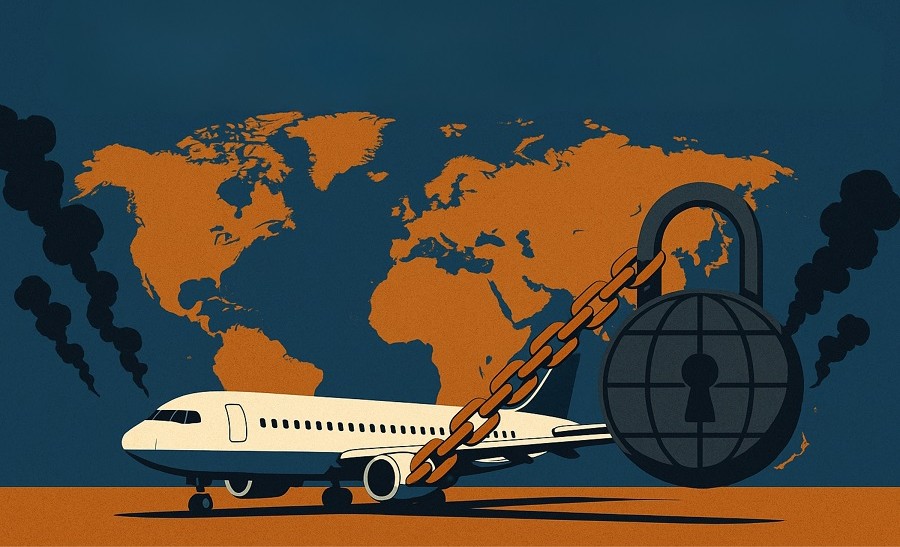
In less than five years, global travel has been reshaped by a sequence of systemic shocks: the COVID-19 pandemic, the energy crisis, and now a renewed wave of geopolitical instability. As a result, the decision-making framework of the modern traveler has shifted.
Price, comfort, and destination appeal are no longer sufficient.
Today, tourism demand is increasingly driven by a new triad: security, predictability, and geopolitical stability.
What we are witnessing is not a temporary adjustment, but a structural transformation of global tourism behavior.
The Republic of Moldova offers a telling case study.
Despite gradual development of its domestic tourism sector, Moldova remains predominantly an outbound tourism market. In 2025 alone, travel agencies served over 600,000 tourists, with approximately two-thirds opting for international travel.
The preferred destinations—Turkey, Bulgaria, Egypt, Greece, and Romania—reflect a familiar Eastern European pattern: high-volume charter flows, seasonal demand, and all-inclusive packages.
However, this model carries inherent fragility.
Outbound-dependent markets are disproportionately exposed to external shocks—particularly disruptions in air connectivity and geopolitical instability in destination regions.
The 2026 travel season begins under the shadow of renewed instability, particularly in the Middle East.
Escalating tensions, combined with disruptions in global aviation corridors, are already influencing travel behavior. European governments have issued updated travel advisories, and risk perception is rapidly becoming a decisive factor in destination choice.
Tourism flows are responding accordingly.
Destinations associated with uncertainty are experiencing declining demand, while countries perceived as stable are gaining competitive advantage.
One of the most significant consequences of this transformation is the re-centralization of Europe within global tourism flows.
For travelers in Romania, Moldova, and across Eastern Europe, intra-European travel is once again becoming the default option.
The reasons are clear: reliable transport infrastructure, political stability, regulatory predictability, and proximity.
In an era of heightened risk awareness, Europe is no longer just a destination—it is a safe zone.
The Republic of Moldova remains largely under the radar for international tourists.
Yet this “invisibility” may prove to be its greatest competitive asset.
Global tourism demand is increasingly shifting toward authentic experiences, low-density destinations, and preserved cultural identities.
Moldova is well positioned across all three dimensions.
Its internationally recognized wine sector, distinctive gastronomy, cultural heritage, and hospitality offer the foundations of a compelling tourism proposition.
In particular, Romania represents a natural gateway market.
Parallel to these developments, domestic tourism is emerging as a critical stabilizing force.
Wineries, rural guesthouses, cultural routes, and gastronomic festivals are attracting a growing domestic audience.
In times of uncertainty, internal tourism acts as a buffer against external volatility.
Yet the competitive landscape remains challenging.
Regional peers—including Romania, Bulgaria, Georgia, and Croatia—are making sustained investments in branding, infrastructure, and international promotion.
For Moldova, the central challenge is strategic positioning.
The country must transition from a collection of tourism assets to a coherent, differentiated identity.
Tourism is entering a new paradigm.
Travelers are more informed, more selective, and more risk-aware than at any point in recent history.
For the Republic of Moldova—and for Eastern Europe as a whole—2026 may represent a decisive inflection point.
Because in today’s tourism economy, destinations are no longer chosen solely for what they offer.
They are chosen for what they guarantee: trust, safety, and stability.