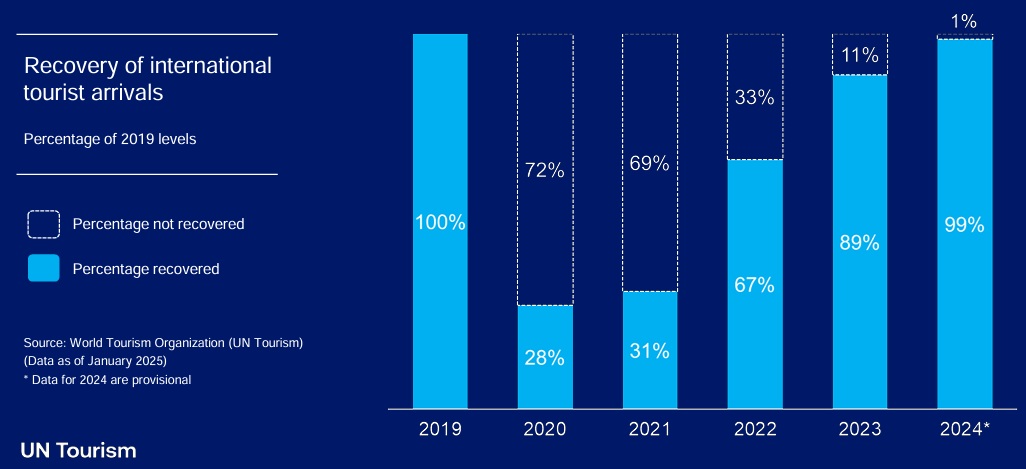
In order to appreciate where international tourism in general stands at the moment when we may see the light at the end of the tunnel of the Covid crisis, followed by the tragic events in Ukraine, Middle East and Iran, and how rural and mountain tourism can contribute to the restart of the whole industry, let me introduce the topic with a few figures from the last UNWTO data and a few geopolitical considerations.
As a consequence of the sanitary crisis, international arrivals dropped by 73 per cent in 2020, compared to 2019, the year when the pandemic started. They were down to 400 million, which means that they were under their 1990 level. Our industry lost one billion arrivals and the benefits of 30 years of growth.
The drop in terms of receipts was almost of the same magnitude: minus 64 per cent. The recovery took a long time and it is only by 2023 that international tourism fully recovered. In 2025 1,472 million of international arrivals were recorded, 335 million of them in the Asia-Pacific region, the second one after Europe.
The war which started on 24th February 2022 between the Russian Federation and Ukraine has had up to now a limited direct impact on world tourism despite the remarkable tourism potential of the two countries. After the Covid, Russian tourism was already substantially weakened. However, it results from this conflict a growing feeling of insecurity in Eastern and Central Europe, a situation which is not favorable for tourism in this part of the world.
A new blow to international tourism came with the hideous attack of Israel on October 13th 2023. Even if the fighting has stopped in the Middle East, the result of 2025 is impacted by what has happened in the Gaza strip.
As everyone knows, the joint attack by the United States and Israel on Iran which triggered the current conflict began on February 28th 2025. It has been the starting point of the ongoing war, and has led to immediate retaliation by Iran. Of course it is too soon to evaluate the consequence of the shock. No one knows when the conflict will end and if additional damages on the infrastructures will be registered.
In the countries affected, the tourism activity stopped immediately. The immediate preoccupation from local governments, airlines and tour operators was the repatriation of the dozens of thousands of visitors blocked in their places of vacation or work, especially in Dubai. For those who were about to leave, travel agents had to propose alternative destinations in other parts of the world.
Except an hotel on the Palm Jumeirah in Dubai hit by a missile, no other tourism infrastructure has been affected up to now. But six airports of the Gulf and the one of Teheran have registered damages at different degrees. The one of Kuwait has been severely hit. Hormuz strait has been blocked and now the situation of the one of Bab el-Manded is uncertain. It results from these circumstances an enormous increase in the price of oil, with a major potential impact on travel and tourism.
It is interesting to note that this new crisis entirely differs from the one of the Covid : seven years ago, all activity stopped in a few weeks’ time, almost worldwide. With Gaza events and the bombing of Iran, the crisis is so far only regional. The direct impact of this new crisis is therefore likely to be limited : because of the ripple effect that is already under way, those visitors who had planned to travel to Dubai and to the other destinations of the Gulf will go to the resorts and beaches of the Mediterannean and the Caribbean.
But the brutal increase in the price of energy already contributes to inflation and is weakening the economy of the industrialised countries which have to pay more for their imports of oil and gas. Households may reduce their travels if the price of gas to fill the tank of their cars and the cost of air tickets become unbereable. To contain the inflation, central banks have to raise the interest rates to the detriment of the economic growth and the employment.
*******
In this difficult context, what can be the role of both rural tourism and mountain tourism? Should we distinguish between the two, should we consider mountain tourism as a specific segment of the tourism market, distinct from the rest of rural tourism? Both areas share the same paradigms as far as their tourism development is concerned. The border between the two concepts is somehow uncertain and may depend on the local situation. But, still, mountain tourism presents its own peculiarities.
A join UNWTO-FAO survey tried to assess the importance and the market share of mountain tourism : 9% to 16% of international visitors are supposed to practice mountain tourism, much less than beach tourism. Europe represents roughly half of them. It is followed by Asia-Pacific and the Americas. In two important tourism countries, Switzerland and Austria, mountain tourism is the first segment of the industry. But these estimates are very vague, and there are no data available concerning domestic frequentation of mountain destinations, which in some countries like China, Canada or France is predominating.
Rural and mountain tourisms offer similar development patterns. All that which has been experimented all over the world, and especially in Western Europe, in term of green tourism, village tourism, or community-based tourism can be applied to both mountain and rural tourisms. Countries such as Ireland, Austria, Switzerland, the Southern part of Germany or the Northern regions of Italy and Spain have been pioneers in implementing such policies. The bed and breakfast concept is a British invention. Interesting initiatives of that kind may also be found in the Nordic countries, or in Canada.
Nowadays, many Eastern European countries, such as Romania or Ukraine in the mountainous Carpathian region, are investing in what is still for them a market niche. In my own country, France, 20 per cent of tourism stays every year take place in rural areas and 15 per cent in mountains areas other than the ones in high-altitude ski resorts. Together, these two kinds of destinations -strictly speaking rural areas and mountain zones at mid-altitude sharing the same characteristics- represent in France more than the tourism frequentation of the sea-side resorts.
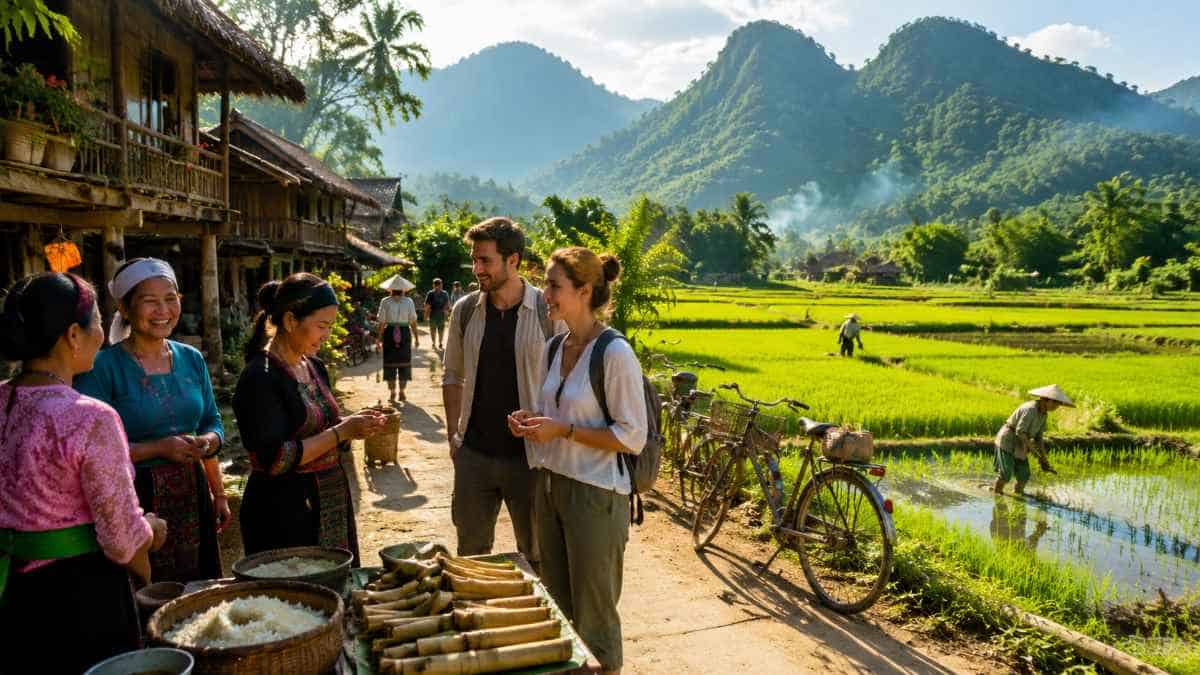
Rural tourism, based on environmental and cultural assets, whether it takes place in lowlands or in highlands, is a fantastic source of creation of wealth and jobs in remote country-sides; it is often the only potentially profitable activity that can be suitable for that kind of areas, which are not appropriate for receiving heavy industries or new technologies plants. Rural tourism is often the only chance governments may have to counterbalance the decline of traditional agriculture, and to maintain the workforce in the remote regions.
Since the World Ecotourism Summit that UNWTO and UNEP jointly organized in 2002 in the city of Quebec, we know that the impact of that kind of tourism on the environment and on the climate is extremely limited: well-conceived, planned and organized, green tourism has demonstrated its capacity to be a smokeless activity. Its impact on related sectors -agriculture, handicrafts production, building industry- is very high, while its ecological effects are really limited, and sometimes turn to be positive.
Let me add that the irruption of the new information technologies and of artificial intelligence is bringing a fresh impulse to rural tourism. It is a field where the numerous tourism operators are usually small, scattered and weak; internet is bringing to them a capacity of accessing the market -and even the international market- they had never enjoyed before.
However, enhancing tourism in rural sites and settlements is somehow complicated; if you want it to be harmoniously developed, it cannot take the aspect of mass tourism. You cannot accommodate in good conditions thousands of visitors in small villages with limited populations.
To receive tourists in remote and poor areas, you need to put in place the basic infrastructures: roads, water supply, electricity, and sanitation, but also leisure and sport facilities, and even today, access to the internet within the accommodations. You have also to invent tourism attractions and to offer sport, cultural and spa products especially designed for that kind of destinations.
The cost of such equipment and innovations may be high; and these investments will be difficult to justify for the city or for the local government if you have not an immediate and clear return on investment, even if most of these new facilities and services will also benefit the local population. But if you try to go too far and too fast, if you try to accommodate an exaggerated number of visitors when the carrying capacity of the site or of the local community is limited, you have to be aware that your model will not be sustainable, and that, at the end, your strategy will reveal itself as being counter-productive. A careful balance is to be maintained between rural and mountain tourism development, on the one end, environmental protection and cultural preservation, on the other.
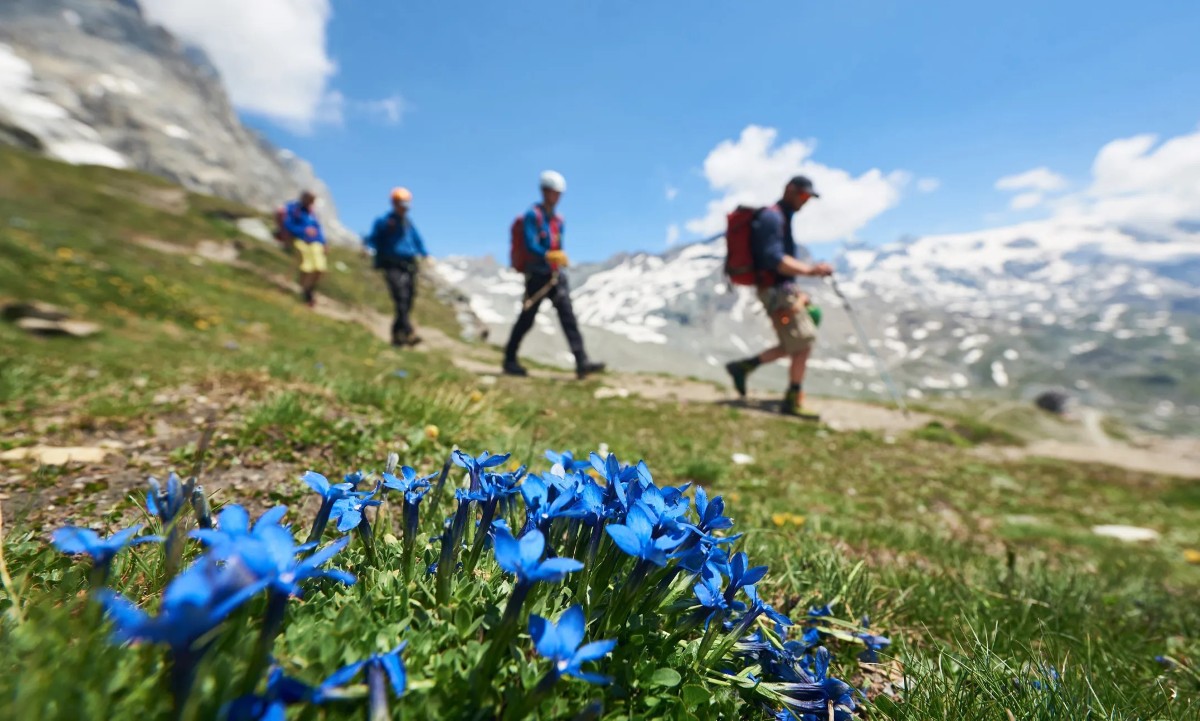
Highland tourism is however distinct from plain rural tourism. The mountainous environment changes a lot of things for tourism development. It modifies both the conditions and the perspectives you have. Fundamentally, highlands present two specificities.
The first characteristic comes from the climate and the elevation. In this regard, the existence of a difference in height is more important that the altitude itself. The latitude is to be kept into consideration because of its impact on the temperatures. The ski industry cannot be developed at the same altitude in the Alps, the Rocky Mountains, the Caucasus and the Himalaya. Except in the Northern latitudes, hills and lower mountains are not suitable for practicing ski and other snow or ice-based sports. But that kind of environment, with its extraordinary landscapes, and is slopes is a paradise for a growing number of sport and leisure activities, from trekking to horse-riding, and from mountain bike to rafting and other water sports.
The second characteristic is about people. Highlanders mostly live in valleys. Because of the constraints coming from the topography, communications are difficult; human settlements are often scattered over large territories; even if people share the same origin, languages and cultural traditions can differ a lot from a valley to another, and, even in the same area, from a village to another. This cultural, and sometimes ethnic, diversity is a major resource for tourism, but it is very fragile. If visitors can use the newly built high-speed trains and motorways and flock to these regions without rules, precautions or limits, this unique heritage will not survive for long.
Highland, or mountain tourism, whatever the way you call it, offers the same economic and social opportunities as rural tourism : it creates jobs and contributes to the alleviation of poverty. Based on these considerations, the concept for mountain tourism could be defined as the following: a valuable segment of rural tourism, developed in an environment enriched by a double added value coming from geography and from culture.
Those familiar with the UN strategy on sustainable development and poverty alleviation may be surprised since there is no specific goal in the 17 UN Sustainable Development Goals (the SDGs) devoted to the mountains, despite the fact that 48 per cent of the world terrestrial surface lies above 500 meters, 27 per cent above 1,000 meters, and 11 per cent above 2,000 meters. One billion people, 15 per cent of the world population, live in altitude, half of them in Asia. More than half of the global fresh water resource comes from the mountains. The harmonious and sustainable development of mountainous regions is essential for the well-being of highlands communities, but bears also important consequences on the conditions of life of the inhabitants of the lowlands, as it was underlined during the 2002 and 2022 UN “International Years of the Mountains”.
Let us come back briefly to three issues that I have already mentioned since they are featured in the SDGs : jobs creation, local culture, and climate change, including its impact on ecosystems and the biodiversity.
Both rural tourism and mountain tourism have an important capacity for wealth and jobs creation. As everywhere else, an initial expenditure made by a visitor in a village should not be reduced to a single act of consumption. The money spent in a tourism enterprise – a restaurant, a hotel, a shop… – generates a flow of incomes in other tourism enterprises or in enterprises located in related sectors, through the purchasing of goods and services necessary to produce the service rendered to the initial consumer, or, for the households, through the salaries and the profits they receive. Through a succession of concentric waves, the initial expenditure impacts at the end the whole local economy. This multiplier effect resulting from tourism is especially strong in landlocked mountain regions where leakages out of the local economic circuit are rather restricted.
It goes without saying that the economic sectors which provide inputs to the tourism enterprises are the first ones to benefit from the mechanism. Tourism is especially linked to sectors such as agriculture, transports, construction industry, and handicraft production; but they are not the only ones. As demonstrated by UNCTAD, for one job created in the tourism industry, two others can be generated in other economic sectors.
In mountain regions, tourism, and especially rural tourism at the grass-roots level, contributes to the alleviation of poverty through jobs and wealth creation; but its impact is broader than that, because its development imposes to fight against what are the real components and the basic factors of poverty, such as poor health conditions and lack of education. The infrastructures and services that tourism requires benefit also local people. Conversely, the revenues generated by the tourism activity help building schools, roads and hospitals. Tourism development and poverty reduction in mountain areas have proved to be mutually supportive.
Enhancing local culture for tourism purposes is especially important in mountain destinations. Highlanders mostly live in valleys. The altitude, the climate and the difficulty of access combined have made their life difficult for centuries. Because of the constraints coming from the topography, communications are uneasy; the density of population is weak in regions which for many of them have been lands of emigration; human settlements are scattered over large territories; some of these communities have been isolated for a long period, and, even if people share the same origin, languages and cultural traditions can differ from a valley to another, and, in the same area, from a village to another.
A good example of the privileged relation between sustainable tourism and local culture can be found in the handicraft production, a sector which is very labor intensive. Traditional skills and techniques, with the cultural values which are associated to them, will, on the condition that standardization is avoided, survive and develop to respond to tourism demand. A new market will be found among visitors, replacing the declining one from the villagers. If the commercial circuit is well new organized, the revenues generated by the selling of handicrafts will go directly to the local households.
In highlands, the natural environment, which allows the practice of many outdoor activities, and the cultural diversity, when it has been preserved, constitute the two main resources for sustainable quality tourism. But both of them are exceptionally fragile. If visitors to the new destinations opening up to mountain tourism can use the newly built transport infrastructures to flock without precaution, regulations, and limits, to the privileged areas which have been preserved until recently, this unique natural and cultural heritage will be endangered.
Climate change is a phenomenon which affect all the segments of the tourism industry, but not in the same proportions and manner. Mountain tourism is the first victim since, as demonstrated by the International Panel on Climate Change (IPCC) the increase in the average temperatures is much higher in altitude.
On the other hand, the heatwaves which affected a large part of the Northern hemisphere during the 2026 summer are important -and paradoxically positive- in this regard : if it is repeated, this phenomenon may become an asset for mountain tourism since visitors are more and more looking for cooler destinations.
It goes without saying that powerful ski industry is vulnerable more than any other sector to the impact of the global warming. Between 1880 and 2012, the average temperatures in the Alps have increased by more than two degrees Celsius, and the trend is accentuating. Snow and ice, the basic raw materials for winter tourism, are becoming scarcer. 100 to 120 days of opening for the ski resorts are required annually to make the industry profitable; this minimum duration of snow cover is more and more difficult to reach at mid-altitude.
A survey conducted by OECD has indicated that with an increase of two degrees Celsius in the temperatures -which is the ambitious target set up by the 2015 Paris agreement- one third of the 200 resorts of the Northern Alps would be negatively affected; with four degrees increase -unfortunately, a likely trend- it would be the two-thirds. If such a dramatic hypothesis becomes the reality, a country like Germany will lose its entire potential for skiing.
But the ski industry is not the only victim. Other segments of the mountain tourism activity are suffering as well. Disappearing permafrost causes damages to the infrastructures, with dangerous rock falls threatening the alpinists. Glaciers, which are major attractions during the summer season, are melting and receding in various parts of the world, in particular the Alps, the Andes and the Himalaya. This was the reason of the disaster which took place in Nepal and China on 29th August 2026, claiming the loss of hundreds of lives, among them those of many tourists. The resource in fresh water that the glaciers traditionally offer to the neighboring mountain villages is becoming scarcer and more uncertain. Production of hydroelectricity is reduced or becomes more erratic.
In various regions, mountain forests, which represent 23 per cent of the world total, are shrinking. The mountain biodiversity, which in many countries is an important attraction for the visitors, the remarkable ecosystems and their very specific wildlife and flora, are seriously endangered.
In short, constraints and changes resulting from the global warming will force mountain tourism operators and destination management organizations to cut some activities or to implement costly mitigation and adaptation measures. From my point of view, responding and adapting to the global warming represent the major challenge facing mountain tourism in the foreseeable future. The survival of an entire industry is at stake.
The mountains, because of the specificity of the human and natural environment they offer, are situated at the core of the paradigm resulting from the transition of modern tourism to a more sustainable model of development, while maintaining a rapid growth rate.
Rural tourism and mountain tourism have strongly contributed to the growth of international tourism over the past decade. This is likely to continue : in the new environment, one thing appears certain: rural tourism and mountain tourism are destinations where visitors are the less at risk. The concentration of flows, except on a few overfrequented high-mountain sites, is generally very weak.
It has to be noted that rural tourism is the opposite of overtourism. Outdoor sports appear as the safest activities in terms of both health and security. Those who have the choice flee the big cities and look for places to stay in the countryside. In many touristic locations, the prices of second homes are sky-rocketing. To some extent, working at a distance, allows a combination of periods of activity and others of leisure; in the same time that it affects negatively the MICE industry, and business tourism in general, it offers an avenue of development to both rural and mountain tourism.
Finally, I would like to be very cautious in suggesting what could be the changes in public and private policies induced by the Covid crisis. The uncertainty is still too high to draw conclusive and definitive lessons from this exceptional period of our modern history. It’s certain, that consumers, enterprises and governments behaviors will be drastically modified, even if, in my perception, it’s too soon to describe to which extend and in which directions.
But I am not forgetting what I learnt during another major crisis for our sector: the December 2004 tsunami. The then Prime minister of Thailand taught me that the Chinese ideogram corresponding to the English word “crisis” has a double meaning: “disaster”, but also “opportunity”. In 2020-2021, we went through a disaster, but we may be now facing a real opportunity. Let us hope that it will be the same the day when the wars in Ukraine and Iran will have come to an end !
From my point of view, the opportunities resulting from both the Covid crisis and the current wars in Ukraine and in the Middle East, when they have come to an end, may represent a chance to move toward an increased sustainability of the tourism industry. We understand now that long-term policies are better than short-term tactics, that the capacity to respond to shocks through an increased flexibility has to be the rule, that diversification should prevail, both in the choice of the markets and in the selection of the products.
To some extent, the demand for more sustainability resulting from this terrible pandemic meets the challenge imposed by the necessity to respond to the climate change -a necessity which existed before this extraordinary period and is reinforced by its consequences. As a lesson of the crisis, developing next-door rural and cultural tourism will appear as a better option that flying to long-haul beach tourism destinations.
Rural tourism and mountain tourism are cousins. They result from the same desire for experimenting a more balanced, active and responsible way to have leisure and to take vacations. They are two expressions of the same quest for a more sustainable and inclusive society. For this basic reason, there are also betting on the same segments of the market, trying to attract the same potential travelers.
They will be both allies and competitors on the narrow path that will take the tourism industry to the post-Covid era. And, let us hope, to a time when the current wars in Ukraine and Middle East, will have come to an end.