


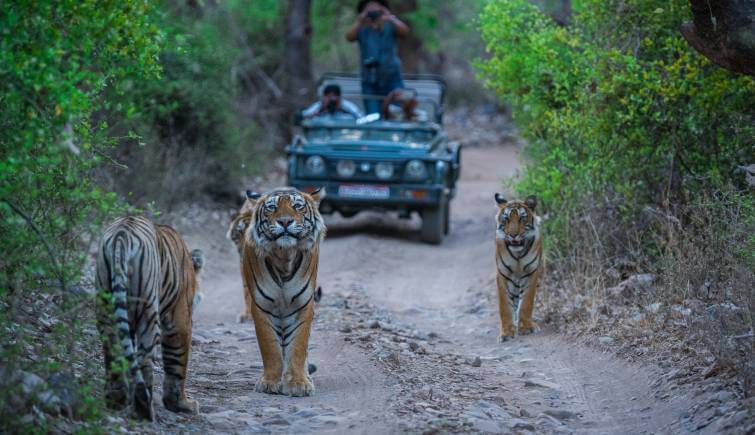
Cambodia’s tourism sector has shown strong post-pandemic recovery, driven largely by its globally renowned cultural heritage sites such as Angkor Wat. Yet, the country’s extensive protected area network and high biodiversity offer opportunities for diversification beyond cultural tourism. This paper assesses the potential for tiger reintroduction—specifically in the Cardamom Mountains Landscape—to catalyse a new, sustainable wildlife-based tourism economy. With Cambodia formally acknowledging tiger extinction in 2016 and identifying the Eastern Plains Landscape and Cardamom Mountains as candidate reintroduction sites, renewed attention has turned to leveraging this flagship species to enhance conservation financing, stimulate local livelihoods and strengthen national tourism competitiveness. Cambodia welcomed 6.7 million international visitors in 2024, generating USD 3.6 billion—figures that underscore the importance of exploring additional tourism products.
Drawing upon comparative experiences from India’s Kanha Tiger Reserve and Nepal’s Chitwan National Park, this study estimates that tiger-based tourism in the Cardamoms could generate USD 5–7 million annually within a decade, create significant local employment, and contribute up to 2% of national tourism GDP. Complementary mechanisms—such as wildlife levies, regulated safari zoning, community-based ecotourism models, and strong governance—could ensure equitable benefit sharing and long-term financial sustainability. While detailed ecological and logistical prerequisites for tiger reintroduction are beyond the scope of this paper, we assume these foundational conditions to be met under the Cambodia Tiger Action Plan. Instead, our focus is on analysing economic potential and tourism diversification opportunities arising from tiger restoration. By integrating biodiversity conservation with strategic tourism expansion, tiger reintroduction presents Cambodia with a unique opportunity to revive a lost species, stimulate rural economies, and position itself as a leading eco-tourism destination in Southeast Asia.
Keywords: Tiger reintroduction; Wildlife-based tourism; Cardamom Mountains Landscape; Conservation economics; Nature-based tourism development
Introduction
Nature-based tourism, including ecotourism, is a significant and rapidly expanding segment of the global tourism industry, generating billions of dollars in revenue annually. It is a growing market that is not only economically important but also plays a crucial role in protecting biodiversity and supporting local communities (Samal & Dash, 2023; World Bank, 2024). Nature-based tourism is a significant source of revenue for many countries, supporting local economies and creating jobs. The global ecotourism market was estimated at USD172.4 billion in 2022 and is projected to reach USD374.2 billion by 2028, with a growth rate of 13.9% (Market research, 2023). Developing countries, for example in South Asia and Southeast Asia, with abundant natural resources, provide an opportunity for economic growth and development with nature tourism (Christie & Crompton, 2001; OECD, 2009; United Nations Environment Programme, 2013).
Wildlife tourism is a component of nature-based tourism defined as ‘tourism undertaken to view or encounter wildlife’ (Duffus & Dearden, 1990; Reynolds & Braithwaite, 2001). Wildlife tourism raises awareness about benefits from nature and also produces economic benefits that can support protected area management and conservation initiatives (Roe et al., 1997; Balmford et al., 2009; Hudson & Lee, 2010). Therefore, wildlife tourism can provide the means to offset conservation costs (Lindsey et al., 2005), create an incentive to conserve through revenue sharing (MacKenzie, 2012) and positively affecting local communities’ attitudes towards conservation (Infield, 1988). Wildlife tourism destinations often use mega-herbivores and large carnivores as flagship species by linking them to conservation campaigns (Skibins, 2012). Flagship species, which are often charismatic animals, are able to inspire a passionate connection with nature to raise awareness and funds for conservation and improve public recognition of a site or tourist destination (Walpole & Leader-Williams, 2002; Dalerum et al., 2008; Skibins, Powell & Hallo, 2013). Wildlife tourism, if based on a flagship species, can increase political support for conservation (Xiang et al., 2011) and raise public awareness and financial support for the conservation of supporting ecosystems (Skibins et al., 2013; Walpole & Leader-Williams, 2002).
The tiger (Panthera tigris) is considered one of the most charismatic flagship species globally. They promote forest conservation and raise public awareness, as well as secure financial support within their communities. Today, there are fewer than 4000 wild tigers living in their natural habitat, occupying a mere seven percent of their historical range (Dinerstein et al. 2007). Of the 13 tiger range countries, there is no evidence of breeding populations in Cambodia, Vietnam (Walston et al., 2010) and Laos (Rasphone et al. 2019). Key factors in the demise of tiger populations is the loss of habitat, destruction of individuals because of their threat to human populations and domestic animals and take for the wildlife trade in tiger claws and traditional medicines based on internal organs. Exacerbating these issues is the natural ecology of the animal, including its solitary behaviour and natural low population density. Thus, in any consideration of reintroduction of tigers, it is necessary to ensure a sufficiently large and remote area of suitable habitat, preferably with the presence of large prey species, security of human populations, preferably without large farm animals and the ability to manage the threat of poaching for the wildlife trade. These ecological prerequisites are assumed to be met and therefore not discussed in detail.
In a significant and commendable step, Cambodia became the first country to acknowledge national extirpation of tigers in the 21st Century (despite tigers likely to have gone extinct in Laos and Vietnam in the preceding years) and started to develop clear steps for recovery. Tiger reintroduction was identified as a critical operation in the Cambodia Tiger Action Plan (CTAP) endorsed in 2016 by the Ministry of Agriculture, Forestry and Fisheries (MAFF). The Eastern Plains Landscape in Mondulkiri Province and the Cardamom Mountains Rain Forest in Koh Kong province were identified in the CTAP as candidate landscapes for tiger reintroduction. The Eastern Plains Landscape and the Cardamom Mountains Rainforest were selected in the CTAP for tiger reintroduction due to their large, contiguous forest cover, healthy and recovering prey bases, and historical presence of tigers. The Eastern Plains offers expansive dry forests, while the Cardamoms provide dense rainforest, strong ecological connectivity, and secure core zones with low human-livestock interaction. These landscapes meet the essential ecological and security conditions necessary for sustaining a viable tiger population.
Nestled in the southwestern part of the Indochina peninsula, Cambodia is one of the fastest-growing economies in Asia. Much of the country’s landscape is characterized by a low-lying central plain surrounded by uplands and low mountains. Dominant features include the seasonally inundated Tonle Sap, Southeast Asia’s largest freshwater lake, and the Mekong River, which traverses the country from north to south. Cambodia has one of the world’s most extensive protected area networks; more than 75,000 km2, or approximately 41% of the country’s area, and connected through a system of biodiversity corridors.
Described as one of the ‘great game-lands of the world; a Serengeti of Asia’, the plains of northern and eastern Cambodia support a diverse and abundant megafauna of ungulates, predators and scavengers (Wharton, 1957; Tordoff et al., 2005). Cambodia, however, suffered substantial political instability and conflict throughout the 20th century escalating during the Lon Nol (1970-1975) and Pol Pot (1975-1979) regimes (Chandler 2000). There is evidence of declines in the regional population and distribution of large mammal species including tiger, leopard (P. pardus), Asian elephant (Elephas maximus), banteng (Bos javanicus), Eld’s deer (Cervus eldii) and hog deer (Axis porcinus) (Duckworth & Hedges, 1998; Loucks et al., 2008).
Tourist trends in Cambodia
Cambodia’s tourism sector experienced a significant rebound in 2024, welcoming approximately 6.7 million international tourists; an increase of nearly 23% from 2023. This surge generated an estimated USD3.6 billion in revenue, underscoring the country’s tourism sector as a vital pillar of its economy. The primary international source markets included Thailand (32%), Vietnam (20%) and China (12.7%) (Source: Ministry of Environment). In addition to international arrivals, domestic tourism remained robust, with millions of Cambodians exploring local attractions. Tourism now contributes significantly to Cambodia’s GDP and plays a key role in employment and rural development. The Ministry of Tourism continues to prioritize sustainable and diversified tourism products and experiences, including wildlife and eco-tourism, as core to its strategic growth agenda.
Cambodia is known for the famous Angkor Wat Heritage Site, which is one of the most important archaeological sites in South-East Asia located in northern province of Siem Reap. Stretching over some 400 km2, including forested area, Angkor Archaeological Park contains the magnificent remains of the different capitals of the Khmer Empire, from the 9th to the 15th century. The area is one of the premier tourist destinations nationally and tourism is seen as a key component for socio-economic development of Cambodia. The Angkor Archaeological Park welcomed nearly 1,023,688 foreign tourists in 2024, generating USD47.83 million in revenue, a 28.27% increase from the previous year (Source: Ministry of Tourism, Royal Government of Cambodia).
Period | Foreign Visitors | Ticket Revenue (in USD) |
Pre‑COVID (2019) | ~2.2 million | ~99 million |
During COVID | 2020: 400,889 2021: <200,000 | 2020: 18.65 million |
Early Recovery | 2022: 287,454 | 11.5 million |
Post‑COVID | ~798,069 in 2023 | 13.52 million |
By End‑2024 | ~1,023,688 in 2024 | ~47.8 million |
Table 1: Overview of international tourist arrivals and revenue at Angkor Archaeological Park before, during, and after the COVID-19 pandemic
The province of Koh Kong, located in south-western Cambodia, is characterized by a predominantly natural landscape with a high proportion of its area covered by forest and natural ecosystems. Specifically, approximately 85% of Koh Kong is covered by forests and natural ecosystems, which makes Koh Kong a significant region for biodiversity conservation and natural resource management (Muñoz et. al., 2024). Three major protected areas—Central Cardamom Mountains National Park (401,313 ha), Southern Cardamom National Park (410,392 ha), and Botum Sakor National Park (171,250 ha)—form the core of southwestern Cambodia’s conservation landscape. Botum Sakor lies entirely within Koh Kong province, while the other two extend across provincial boundaries. Together, they account for approximately 88% of Koh Kong’s total land area and hold significant biodiversity value (Ministry of Environment, 2017). Koh Kong is home to a rich variety of plant and animal species, making it an important area for biodiversity conservation.
Its natural landscape is not only ecologically important but also economically significant due to its resources and potential for tourism. (Source: Ministry of Tourism, Royal Government of Cambodia).
Although, the primary destination for the tourists in Cambodia is more focused on cultural heritage sites such as Angkor Wat and rural landscapes, livelihood and cultural heritage tourism can be complemented with wildlife tourism, extending the opportunity to generate higher revenues, which can directly and indirectly contribute to the economy and GDP of the country and alleviate poverty in remote areas. In this paper, we assessed the possibility of using tigers as flagship species to promote wildlife-based tourism in more remote areas and diversify Cambodia as an internationally attractive destination.
Wildlife tourism in Cambodia’s wild areas
In recent years, landscapes of Koh Kong Province and the Cardamom Mountains have emerged as premier destinations for eco-tourism in Cambodia. These areas are rich in biodiversity and natural attractions, hosting a variety of critically endangered and endemic species, including the Siamese crocodile (Crocodylus siamensis), pileated gibbon (Hylobates pileatus), sun bear (Helarctos malayanus) and Asian elephant (Elephas maximus). Wildlife experiences in the region are based mostly on forest treks, community-based ecotourism projects, and guided tours within protected areas such as Botum Sakor National Park and Central Cardamom Mountains National Park. The Chi Phat community eco-tourism initiative and Trapeang Rung village are notable examples where local communities have successfully linked conservation with tourism towards improved livelihoods.
In 2024, Koh Kong attracted more than 511,000 visitors, including 492,000 domestic and 19,000 international, representing 1.75% of Cambodia’s total national tourism volume (29.22 million). Projections suggest that by 2030, the province could welcome nearly 1.5 million visitors, accounting for 3.7% of the national total (Table 2).
Visitors typically stay between 3 to 5 days, participating in jungle safaris, kayaking, bird watching, and volunteering in conservation activities. As infrastructure develops and with tiger reintroduction, wildlife tourism is expected to become one of the most valuable economic drivers in the province, based on the types of experiences currently only offered in India (USD200-USD500 per person for 3 days).
Table 2. Visitor numbers and national tourism share for Koh Kong province, Cambodia (2023–2030)†
Year | Koh Kong Domestic Tourists (‘000) | Koh Kong Foreign Tourists (‘000) | Total Koh Kong (‘000) | Cambodia Domestic Tourists (million) | Cambodia Foreign Tourists (million) | Cambodia Total Tourists (million) | Koh Kong Share of National Tourists (%) |
2023 | 311 | 6 | 317 | 18.74 | 5.45 | 24.19 | 1.31% |
2024 | 492 | 19 | 511 | 22.52 | 6.70 | 29.22 | 1.75% |
2025 | 856 | 55 | 911 | 24.55 | 7.24 | 31.79 | 2.87% |
2026 | 921 | 60 | 981 | 26.02 | 7.67 | 33.69 | 2.91% |
2027 | 1,012 | 66 | 1,078 | 27.06 | 8.13 | 35.19 | 3.06% |
2028 | 1,220 | 70 | 1,290 | 28.14 | 8.54 | 36.68 | 3.52% |
2029 | 1,310 | 76 | 1,386 | 29.00 | 9.05 | 38.05 | 3.64% |
2030 | 1,400 | 80 | 1,480 | 30.15 | 9.56 | 39.71 | 3.73% |
† Note: Figures for 2023 and 2024 are actual; figures from 2025 onward are official projections by the Ministry of Tourism of Cambodia.
Source: Tourism Statistics Department, Ministry of Tourism (2025).
Can tigers help?
The step of formally initiating the process for reintroduction of wild tigers into the Cardamom Mountains Landscape, make Cambodia the first country in Southeast Asia to do so in over a decade. The plan to reintroduce wild tigers into the Cardamom Mountains Landscape includes initially translocating one male and three female tigers from India, supported by strong bilateral cooperation and guided by IUCN translocation protocols. The Cardamoms Landscape, with its vast protected forest cover, minimal human pressure, and recovering prey base, offers an ideal site for re-establishing a viable tiger population. This bold initiative is expected to transform the region into a high-value eco-tourism hub, similar to Chitwan in Nepal or Kanha in India, where tiger tourism generates millions annually. In Chitwan, for example, tiger presence has directly contributed to the creation of over 6,000 jobs and significantly improved local infrastructure (Ref needed). Beyond economic benefits, the tiger’s return would be a beacon for conservation in Cambodia, galvanizing national and international support and elevating the country’s global profile in biodiversity conservation and restoration.
It is well known that tiger habitat holds a wide range of recreational opportunities. They form the backdrop for non-consumptive recreational activities such as hiking, birdwatching, wildlife viewing and related pursuits. In addition, increased tourism also positively affects local economies with flow-on secondary effects to tourism support sectors, which influences the livelihood of many people residing near such areas (Verma et al. 2015). The Cardamoms Landscape is quite similar to a typical geo-physiographical representative of the Central India Highlands, Kanha Tiger Reserve (KTR), which is internationally renowned for successful conservation of two endangered wildlife species: the Royal Bengal Tiger (Panthera tigris tigris) and the Central Indian Barasingha (Rucervus duvauceliii). It is estimated that the KTR provides flow benefits worth USD2.3 million (~USD1120 per hectare) annually. One of the important services originating from Kanha includes recreation value or revenues from tourism related activities, which itself generates USD5.3 million per year. Various other important ecosystem services originating from KTR include gene pool protection, provisioning of water to downstream regions, fodder in buffer areas, and habitat and refuge for wildlife and sequestration of carbon (Verma et al. 2015).
Similar revenues can be generated for the Cardamoms Landscape in Cambodia with careful and meticulous planning, which ultimately would contribute to the country’s GDP and supporting mixed livelihoods for local communities. Successful frameworks for tiger-based wildlife tourism already exist which, if appropriately adapted for the Cambodian physical and social environment, can be utilized to help plan profitable tiger tourism in Cambodia. With a long-term perspective of conservation through tourism of an iconic species, its habitats and improving the wellbeing of local communities, there exists the opportunity to generate sufficient revenue to offset initial investments in tiger conservation and wildlife tourism. We use the wildlife safari experience from KTR as a model for the Cardamoms.
- Tourist routes and capacities: It is well-known that tourists can be detrimental to biodiversity, including iconic wildlife, if not managed (regulated and controlled). We support application of the 80:20 rule in Cardamoms, where only 20% of the area should be allowed for tourism purposes, while 80% of the area is an inviolate zone to be accessed only for protection and research purposes. A similar policy in Indian tiger reserves has yielded fruitful results both in terms of controlling overcrowding as well as maintaining intact undisturbed habitats to sustainably support tigers and other wildlife. For generating relative profits from wildlife tourists, the safari zones and numbers of safari vehicles must be capped to minimize tiger disturbance. Entry fees would be collected from each visitor or group, which can be done directly at the entry gates or through corporate group tour arrangements. Entrance per person should start at a modest level then increase over time to reflect the quality of the experience. Local Cambodians can be charged around USD35, while foreigners around USD70. A similar sized park in India (e.g. KTR), allows around 80 vehicles for safaris per day based on a first come booking basis. This is applied successfully in Sri Lanka for elephant experiences (e.g. Wilpattu National Park). Each vehicle has a maximum of 6 tourists, one official guide and one driver, with a maximum of two safaris (morning and afternoon). Considering the current trend of local tourist’s percentage in Koh Kong, around USD5 million can be expected from entry fees, and a maximum of 960 persons on any given day, during a maximum of 180 days of the peak tourism season a year. The revenues would escalate with marketing of a quality experience and increased foreigners visiting the Cardamoms for tiger sightings. This will also help create direct employment for around 160 people (drivers and guides) from local communities, which can help generate support for wildlife conservation and act as a source of income and diversified livelihoods.
- Wildlife levy: We use levy to mean an amount of money paid to a government (a tax) or organization for a specified purpose. A wildlife levy, or the willingness to pay (WTP) by wildlife tourists, can be used to help sustain an introduced animal and improve economic growth and environmental quality of an area (Israel & Levinson, 2004). The pricing strategy to visit a protected area is as important for protecting the tigers and wildlife as it is for the local economy (Samdin et al., 2010). All tourist’s visiting Koh Kong and the Cardamom Landscape should be asked to contribute USD1 and USD2 as a wildlife levy, which should be applicable for both local and foreigner tourists, respectively. Since more than 75% of tourists visit Koh Kong Province to experience nature, an additional one or two dollar per person per night would be a small contribution for the protection of nature. The levy would help generate an additional USD 100,000 per year, which will add significantly to the ability of the government to manage the natural assets in the long term. However, it would be imperative that the management and governance of the revenues generated from a wildlife levy is transparent and is used only for the management of protected areas and the development and protection of communities residing near these protected areas. With an increase in tourism products and sites across Koh Kong, it would be fruitful to apply and adhere to standards such as Community Based Ecotourism (CBET). Any developments of new hotels and guesthouses must be managed harmoniously with the natural assets that help to draw more tourists to the province, and therefore more revenues.
Tiger tourism projections and contribution to Cambodia’s economy
Building on trends from India and Nepal, the introduction of tiger tourism in the Cardamoms Landscape could generate more than USD5 million annually within five years of reintroduction. With proper infrastructure, international marketing, and strong enforcement, this could grow to over USD7 million per year in the following decade, which can be used to cover the cost of law enforcement and protection for all protected areas in the province. These figures are based on comparable visitation and revenue streams reported for India’s Kanha and Nepal’s Chitwan tiger reserves. In Cambodia’s context, even a modest 10% increase in international tourist stays and a rise in average stay duration (from 3 to 5 nights) due to tiger tourism could significantly boost regional economies. Local communities could benefit from over 300 new direct jobs (as guides, rangers, and service staff), while indirect employment opportunities across transport, food, and lodging sectors could reach several hundred more. A USD1 wildlife levy per visitor would generate an additional USD300,000 annually, funding community conservation efforts and improving protected area management. Ultimately, tiger tourism could contribute an estimated 1.5–2% to Cambodia’s overall tourism GDP, making it a transformative economic and conservation strategy.
Table 3: Summary of Tiger Tourism Economic Projections (2024 Onwards):
Parameter | Projection (First 5 Years) | Projection (10+ Years) |
Annual Tiger Tourism Revenue | USD5 million | USD7+ million |
Wildlife Levy Income | USD100,000 – USD300,000 | USD300,000+ |
Direct Jobs Created | 300+ | 500+ |
Indirect Employment | 500+ | 800+ |
Contribution to Tourism GDP | 1.5% | 2% or more |
Conclusion
Cambodia has seen a positive surge in foreign tourist arrivals in 2024, significantly aiding the country’s economic growth. The tourism sector contributed 9.4 per cent to Cambodia’s gross domestic product (GDP) in 2024, making the sector one of the key drivers of the country’s economy (Source: Ministry of Tourism). During 2024, the Kingdom welcomed 6.7 million foreign tourists, a year-on-year increase of 22.9 per cent, and attracted 22.52 million domestic tourism movements, up 22 per cent from the year 2023. The influx of foreign tourists generated $3.637 million, reflecting a year-on-year rise of 18 per cent. With effective and responsible marketing and enhanced tourism packages, the potential to increase the revenues from tourism is immense. In a bid to attract more foreign tourists, particularly from China and other Southeast Asian countries, it might be worthwhile to create tour packages in line of “Beyond temples to forests and wildlife” or “Angkor and tigers of Cambodia”. Currently the closest the regional tourists can view tigers are at the infamous (and illegal) tiger temples in Thailand. While there are few wild Indochinese and Malayan tigers left in SE Asia including in Thailand, Myanmar, Indonesia and Malaysia, sighting them in natural conditions is a rare event. If tigers are reintroduced in Cambodia, and proper safari experiences are planned, tourists will have an extra incentive to visit the country. For that the Royal Government of Cambodia will also need to provide its commitment at the highest level and pay additional attention to its policies of sustainable development. Millions of urban tourists are within a two-hour flight of the Cardamoms, and could come from the regional centers in mainland China, Hong Kong, Bangkok, Kuala Lumpur, Hanoi, Ho Chi Minh, Danang, and Singapore. These are already the majority visitors to Angkor Wat and could be directed towards Koh Kong which can significantly boost the province as well as country’s revenues. That would also require aggressive and appropriate marketing from the government as well as other stakeholders. The government should encourage product development to expand options for tourists beside visiting temples, strengthen law enforcement, strengthen the quality of tourism products and services, and promote the market via digital platforms internationally.
Tiger tourism will also help create opportunities and income to local communities directly and indirectly. The income generated will therefore be useful to provide local socio-economic incentives and benefits such as providing education for the host communities (Orams 1995; Higginbottom et al. 2001). Besides education, other positive social impacts for the locals could be employment, cultural exchanges, better sanitation facilities, improved health services, increased social interactions, entrepreneurship and more motivation towards wildlife conservation. Similarly, the local communities can benefit by promoting their local products and developing their skills in preservation of their culture.
Wildlife tourism besides bringing opportunities and incomes to local communities, would also deter poachers through an increase human activity (both rangers and tourists) in the area. It also hugely increases the value of maintaining a flourishing living ecosystem and can maintain motivation for the park rangers in Cambodia. We believe that initiating tiger tourism will attract tourists to lengthen their stay in Cambodia to observe tigers in the wild, beyond the visit to Angkor Wat. This, no doubt, would elevate Cambodia’s image as a desirable tourist destination and will provide an exclusive experience in wildlife tourism in Southeast Asian nations. It will also lift Cambodia’s leaders to exceptional conservation heights for their role in restoring the tiger population and contributing to the global goal of doubling tiger numbers.
Acknowledgement: We express our sincere gratitude to the Ministry of Tourism and the Ministry of Environment of the Royal Government of Cambodia for providing critical datasets, insights and strategic guidance that shaped this analysis. We thank Wildlife Alliance, the Cambodia Tiger Action Plan (CTAP) technical teams, and field staff working across the Cardamom Mountains Landscape for their continued dedication to wildlife conservation and community engagement. We are grateful to the local communities of Koh Kong province whose collaboration and stewardship of natural resources underpin the long-term success of conservation-based tourism models. Special thanks are extended to colleagues and partners who provided constructive feedback on earlier drafts of this paper. Their inputs significantly improved the clarity, structure and direction of this work.
Authors: Jimmy Borah1*, Thok Sokhom2, Seng Ratha3 and R.W. (Bill) Carter4
Current Affiliations:
1Deputy Director, Legal & Advocacy Division, Aaranyak, India
2Secretary of State, Ministry of Tourism. Royal Government of Cambodia
3Economic, Social and Cultural Council, Office of the Council of Ministers, Royal Government of Cambodia
4 University of the Sunshine Coast, Torrens University, Australia
References:
Balmford, A., Beresford, J., Green, J., Naidoo, R., Walpole, M. & Manica, A. (2009). A global perspective on trends in nature-based tourism. PLOS Biology, 7, e1000144.
Chandler, D. 2000: A history of Cambodia. 3rd edition. Westview Press, Boulder, Colorado, USA, 232 pp.
Christie, I.T. & Crompton, D.E. (2001). Tourism in Africa, Africa region working paper series no. 12. The World Bank.
Dalerum, F., Somers, M.J., Kunkel, K.E.& Cameron, E.Z. (2008). The potential for large carnivores to act as biodiversity surrogates in southern Africa. Biodiversity and Conservation, 17, 2939–2949.
Dinerstein E, Loucks C, Wikramanayake E, Ginsberg J, Sanderson E., Seidensticker J, Forrest J, Bryja G, Heydlauff A, Klenzendorf S, et al. 2007. The fate of wild tigers. BioScience 57: 508-514.
Duckworth, J.W. & Hedges, S. 1998: Tracking Tigers: A review of the status of tiger, Asian elephant, gaur and banteng in Vietnam, Lao, Cambodia and Yunnan (China). WWF Indochina, Hanoi, Vietnam, 282 pp.
Duffus, D. & Dearden, P. (1990). Non-consumptive wildlife-oriented recreation: a conceptual framework. Biological Conservation, 53, 213–231.
Higginbottom, K., K. Rann, G. Moscardo, D. Davis, and S. Muloin. 2001. Status Assessment of Wildlife Tourism in Australia: An Overview. Gold Coast: CRC for Sustainable Tourism.
Hudson, K. & Lee, D. (2010). Biodiversity and tourism: a valuable relationship. Social Alternatives, 29, 39–43.
Infield, M. (1988). Attitudes of a rural community towards conservation and a local conservation area in Natal, South Africa. Biological Conservation, 45, 21–46.
Israel, D., and A. Levinson. 2004. “Willingness to Pay for Environmental Quality: Testable Empirical Implications of the Growth and Environment Literature.” Contributions in
Economic Analysis & Policy 3 (1): 1–31.
Lindsey, P.A., Alexander, R.R., du Toit, J.T.& Mills, M.G.L. (2005). The potential contribution of ecotourism to African wild dog Lycaon pictus conservation in South Africa. Biological Conservation, 123, 339–348.
Loucks, L., Mascia, M.B., Maxwell, K.A., Huy, K., Duoung, N., Chea, L.B., Cox, N. & Seng, T. 2008: Wildlife decline in Cambodia, 1953-2005: exploring the legacy of armed conflict. Conservation Letters 2 (2): 82-92.
MacKenzie, C.A. (2012). Trenches like fences make good neighbours: revenue sharing around Kibale National Park, Uganda. Journal for Nature Conservation, 20, 92–100.
Market Research, 2023. Ecotourism Market: Global Industry Trends, Share, Size, Growth, Opportunity and Forecast 2023-2028. IMARC Services Pvt. Ltd. – 2/3/2023 – 148 Pages – ID: IMRC17761165. URL: https://www.marketresearch.com/IMARC-v3797/Ecotourism-Global-Trends-Share-Size-33618960/
Ministry of Environment. (2017). National Protected Areas Strategic Management Plan 2017–2031. Phnom Penh: Royal Government of Cambodia.
Muñoz, V. H., Phearoon, N., Furey, N., Sopha, S., Reaksmey, S., Chartier, G., Det, S., Vutthy, V., Sinovas, P., Chhuoy, S., San, C., Glue, M., Ngor, Y. R. P. B., Holden, J., and Rog, S. 2024. Mangrove biodiversity survey report, Peam Krasop and Koh Kapik, Fauna & Flora and Fishing Cat Ecological Enterprise in collaboration with the Ministry of Environment of Cambodia. Phnom Penh, Cambodia.
OECD (2009). Wildlife and nature-based tourism for pro-poor growth, in natural resources and pro-poor growth: the economics and politics, OECD Publishing.
Orams, M. B. 1995. “Towards a More Desirable Form of Ecotourism.” Tourism Management 16 (1): 3–8.
Rasphone, A., Kéry, M., Kamler, J.F., Macdonald, D.W. 2019. Documenting the demise of tiger and leopard, and the status of other carnivores and prey, in Lao PDR’s most prized protected area: Nam et – Phou louey, Global Ecology and Conservation.
doi: https://doi.org/10.1016/j.gecco.2019.e00766
Reynolds, P.& Braithwaite, D. (2001). Towards a conceptual framework for wildlife tourism. Tourism Management, 22, 31–42.
Roe, D., Leader-Williams, N., Dalal-Clayton, B. 1997. Take only photographs, leave only footprints: the environmental impacts of wildlife tourism. IIED Wildlife and Development Series No.10, Institute for Environment and Development, London.
Samal, R. and Dash, M. 2023. Ecotourism, biodiversity conservation and livelihoods: Understanding the convergence and divergence, International Journal of Geoheritage and Parks,
11(1), 1-20, ISSN 2577-4441, https://doi.org/10.1016/j.ijgeop.2022.11.001
Samdin, Z.,Aziz, Y. A., Radam, A. and Yacob, M. R. 2010. Factors Influencing the Willingness to Pay for Entrance Permit: The Evidence from Taman Negara National Park. Journal of Sustainable Development 3 (3): p212.
Skibins, J.C. (2012). The influence of flagship species on in situ and ex situ wildlife tourists’ connection to wildlife and pro-conservation behaviors. (Ph.D. thesis). Clemson, USA: Clemson University.
Skibins, J.C., Powell, R.B.& Hallo, J.C. (2013). Charisma and conservation: charismatic megafauna’s influence on safari and zoo tourists’ pro-conservation behaviors. Biodiversity and Conservation, 22, 959–982.
Thapa, B., Aryal, A., Roth, M. & Morley, C. (2017). The contribution of wildlife tourism to tiger conservation (Panthera tigris tigris), Biodiversity, DOI:10.1080/14888386.2017.1410443
Tordoff, A.W., Timmins, R.J., Maxwell, A., Huy, K., Lic, V. & Khou, E.H. 2005: Biological assessment of the Lower Mekong Dry Forests Ecoregion. – WWF Greater Mekong, Phnom Penh, Cambodia, 171 pp.
United Nations Environment Programme (2011). Tourism, investing in energy and resource efficiency. Tourism chapter in Part II investing in energy and resource efficiency, in towards a green economy, pathways to sustainable and poverty eradication.
United Nations Environment Programme (2013). Tourism. Chapter 7 in green economy and trade, trends, challenges and opportunities.
Verma, M., Negandhi, D., Khanna, C., Edgaonkar, A., David, A., Kadekodi, G., Costanza, R., Singh, R. Economic Valuation of Tiger Reserves in India: A Value+ Approach. Indian Institute of Forest Management. Bhopal, India. January 2015.
Walpole, M.J.& Leader-Williams, N. (2002). Tourism and flagship species in conservation. Biodiversity and Conservation, 11, 543–547.
Walston, J., Robinson, J.G., Bennett, E.L., Breitenmoser, U., da Fonseca, G.A.B., Goodrich, J., Gumal, M., Hunter, L., Johnson, A., Karanth, K.U., Leader-Williams, N., Mackinon, K., Miquelle, D., Pattanavibool, A., Poole, C., Rabinowitz, A., Smith, J.L.D., Stokes, E.J.,
Stuart, S.N., Vongkhamheng, C. & Wibisono, H. 2010: Bringing the Tiger Back from the Brink – The Six Percent Solution. – PLOS Biology, 8, e1000485. doi:10.1371/journal.pbio.1000485
Wharton, C.H. 1957: An Ecological Study of the Kouprey (Novibos sauveli Urbain). Monographs of the Institute of Science and Technology, Monograph 5, Manila, Philippines,
111 pp.
World Bank. 2024. Brief: The Economic Benefits of Nature-Based Tourism. (https://www.worldbank.org/en/topic/environment/brief/nature-based-tourism#:~:text=In%20Banking%20on%20Protected%20Areas,communities%20living%20around%20these%20areas)
Xiang, Z., Yu, Y., Yang, M., Yang, J.Y., Niao, M.Y. & Li, M. (2011). Does flagship species tourism benefit conservation? A case study of the golden snub-nosed monkey in Shennongjia National Nature Reserve. Chinese Science Bulletin, 56, 2553–2558.