

APIT, the National Tourism Platform and Ecosystem Consolidation:
Why the Regional Skills Partnership Is Becoming the Backbone of Tourism Reform
APIT, the National Tourism Platform and Ecosystem Consolidation
Why the Regional Skills Partnership Is Becoming the Backbone of Tourism Reform
In the process of professionalising Moldova’s tourism sector, 2026 marks a structural turning point. After years of fragmented initiatives, project-based interventions and promotion-driven approaches, tourism is entering a phase defined by governance, skills development and coordinated institutional frameworks.
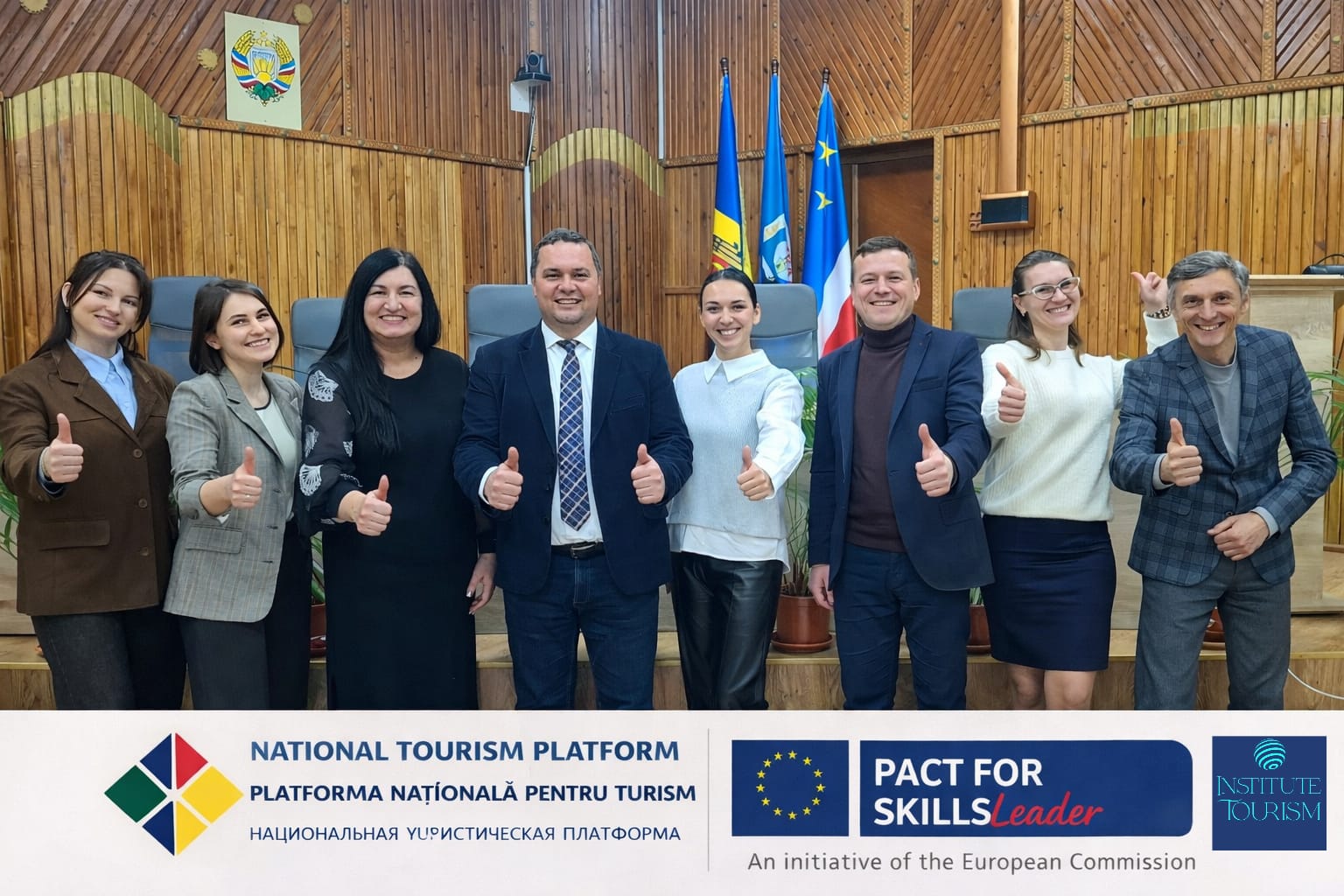
At the core of this transition stands the National Tourism Platform (Platforma Națională pentru Turism), developed as a Regional Skills Partnership Platform, aligned with the European Union’s Pact for Skills – Tourism Ecosystem. This evolution is not a rebranding exercise, but a fundamental shift in how tourism policy is designed, implemented and sustained in the Republic of Moldova.
From Representation to System Architecture
For a long period, Moldova’s tourism sector operated through organisations primarily focused on representation, promotion or isolated projects. While these efforts generated visibility, they proved insufficient to ensure long-term competitiveness, workforce resilience and institutional continuity.
The consolidation of the National Tourism Platform, facilitated by the Asociația Patronală a Industriei Turismului din Republica Moldova (APIT), marks a deliberate move away from fragmentation toward ecosystem governance.
The Platform does not replace existing actors. Instead, it functions as a coordination architecture, providing structure, predictability and shared ownership across public authorities, industry, education and training providers, civil society and regions. This reflects a maturing sector that prioritises processes over projects and institutional coherence over ad-hoc solutions.
Why Regional Skills Partnerships Matter
The Regional Skills Partnership (RSP) model promoted at EU level is built on a clear premise:
tourism competitiveness depends on skills alignment.
This requires alignment between:
- labour market needs,
- education and vocational training systems,
- regional development priorities,
- public policy objectives,
- and private sector demand.
By adopting this model, Moldova positions the National Tourism Platform as:
- a space for co-creation of sectoral policies;
- a mechanism for anticipating skills needs;
- a bridge between regions and national decision-making;
- an operational interface with European programmes, including Erasmus+ and Pact for Skills initiatives.
This marks a transition from reactive policy responses to strategic workforce and skills planning.
APIT’s Role as a Backbone Organisation
Within this framework, APIT assumes the role of a backbone organisation—a concept widely used in European policy ecosystems to describe entities that:
- ensure continuity of multi-stakeholder processes;
- facilitate structured dialogue among diverse actors;
- translate consultations into implementable outcomes;
- uphold agreed governance principles.
This role moves the sector beyond personality-driven leadership or isolated initiatives, anchoring it in collective governance, transparency and shared responsibility, consistent with European standards.
Regions as Co-Creators, Not Beneficiaries
A defining feature of the Regional Skills Partnership approach is the active inclusion of regions. Tourism development is no longer viewed through a capital-centric lens, but as a network of interconnected regional ecosystems.
Regions such as Gagauzia, rural destinations and areas with distinct cultural identities, are integrated as:
- contributors to skills development;
- co-designers of tourism products;
- partners in vocational education and training;
- participants in national and European professional dialogue.
Within this logic, engagement with professional structures such as the Центр регионального туризма и гостеприимства г. Тирасполь (Centre for Regional Tourism and Hospitality of the City of Tiraspol) is framed strictly in terms of sectoral cooperation and skills development, in line with European Regional Skills Partnership principles.
Role of Civil Society and Professional Associations in Skills Development
An important strength of the National Tourism Platform as a Regional Skills Partnership lies in the active involvement of specialised civil society organisations and professional associations, which contribute applied expertise and sectoral depth.
Organisations such as Ecological Society BIOTICA play a key role in integrating sustainable tourism, eco-tourism and nature-based tourism competencies into the national skills agenda, contributing to environmental literacy, protected areas interpretation and responsible tourism practices.
At the same time, the Association of Guides, Lecturers and Translators of Moldova contributes directly to the professionalisation of guiding, interpretation, multilingual communication and cultural mediation, reinforcing service quality, visitor experience and international accessibility.
The inclusion of such organisations strengthens the Platform’s capacity to:
- link skills development with sustainability and heritage protection;
- professionalise frontline tourism occupations;
- ensure quality standards aligned with European practices;
- translate policy frameworks into practical training outcomes.
What Professionalisation Means in Practice
By operating as a Regional Skills Partnership Platform, Moldova’s tourism sector transitions:
- from isolated projects to continuous institutional processes;
- from promotion-first logic to capacity building;
- from short-term visibility to long-term competitiveness;
- from dependency on external funding to institutional maturity.
Professionalisation is no longer measured solely by visitor numbers, but by the sector’s ability to self-organise, train and retain its workforce, ensure quality standards and function coherently across regions.
A Structural, Not Symbolic Reform
The National Tourism Platform, developed as a Regional Skills Partnership Platform, represents one of the most significant—yet understated—reforms in Moldova’s tourism sector.
Its impact will not be defined by immediate headlines or short-term statistics, but by durable outcomes:
- a skilled and adaptable workforce;
- empowered and connected regions;
- institutional coherence;
- meaningful integration into European tourism and skills ecosystems.
Moldova’s tourism sector professionalises when it starts functioning as a system.
The Regional Skills Partnership is the mechanism that makes this possible.